Read This If You’ve Been Injured In A Golf Cart Accident In Arizona
Golf is one of the most common hobbies in Arizona, especially in communities like Sun City and Green Valley. This has led to many communities in Arizona being designed especially for golfers, with golf carts being street-legal in these areas. Unfortunately, this also leads to people being injured in golf cart accidents. Whether it occurs on or off the golf course, these types of accidents can result in life-altering injuries. But it does affect who can be held liable for injuries incurred while operating a golf cart. A skilled injury attorney can help you pinpoint who is responsible for your injuries and assist you in pursuing them for damages. Our Arizona personal injury lawyers offer a competitive contingency rate and start the process with a 100% free consultation by phone. Get scheduled today by calling 480-833-8000.
Requirements for Street-Legal Golf Cart Operation in Arizona
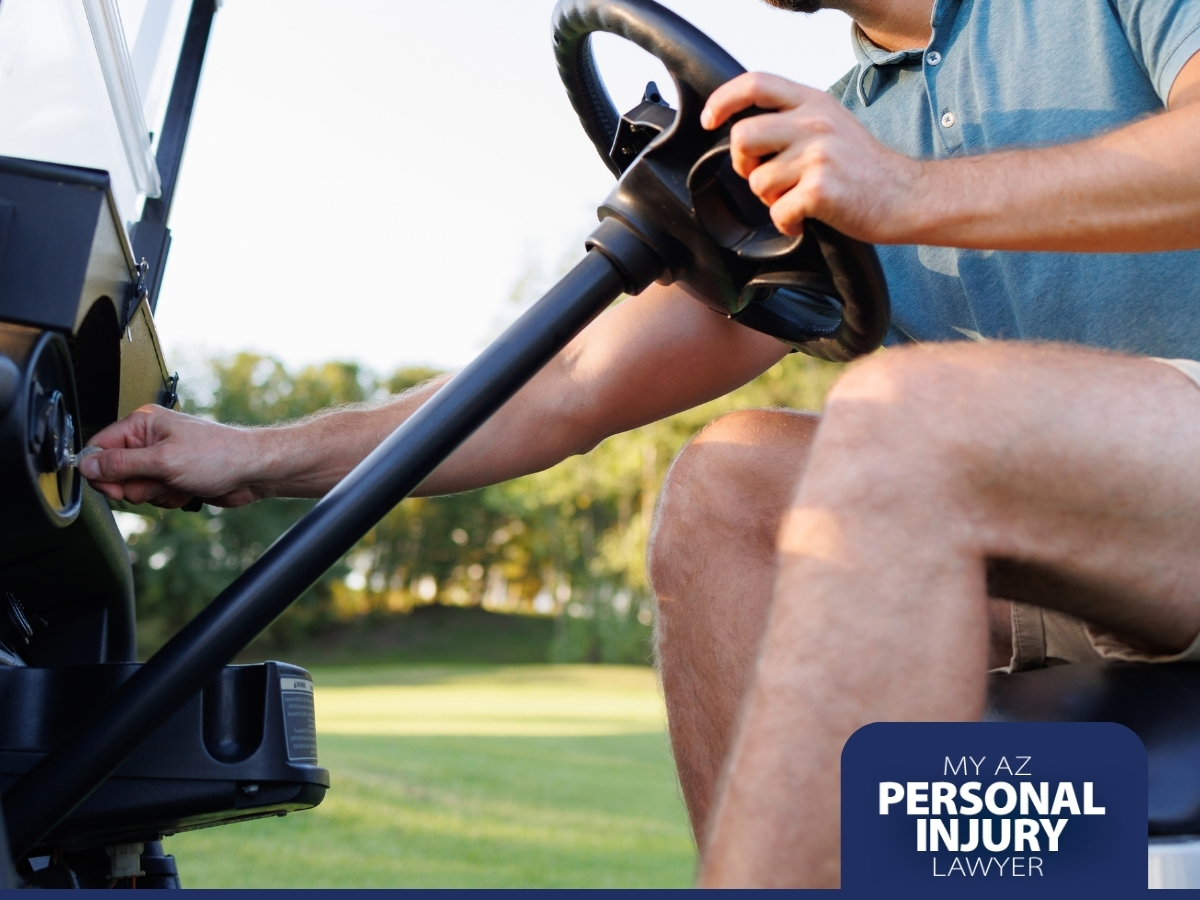
It is true that many of Arizona’s roads are designed with golfers in mind, but there are still requirements that must be met to avoid creating safety issues for others on the road. First of all, someone operating a golf cart on the streets must have a valid driver’s license. It should be registered with the Arizona Department of Transportation, or ADOT. This can be completed at the local MVD, or Motor Vehicle Department. How a golf cart is classified will also depend on its maximum speed. Typically, golf carts can travel no faster than 15 to 20 miles per hour. However, some people modify their golf carts so they can travel at speeds of up to 20 to 25 miles per hour. This can make the golf cart qualify as a Low Speed Vehicle and become subject to certain federal restrictions.
Other requirements for a golf cart to be street-legal are set forth by A.R.S. § 28-966. They can fall under the definition of “neighborhood electric vehicles.” Neighborhood electric vehicles should not be driven at a speed higher than 25 miles per hour. Additionally, neighborhood electric vehicles should not be operated on roads with a posted speed limit higher than 35 miles per hour. There should be a notice of these restrictions somewhere within the driver’s eyesight. Street-legal golf carts should also be equipped with headlights and brake lights, rear-view mirrors, turn signals, and a horn.
Like any other vehicle on the road, someone driving a golf cart as a neighborhood vehicle should have it properly insured. Arizona’s state minimum policy requirements for auto insurance are listed in A.R.S. § 28-4009. The current policy minimums in Arizona are as follows:
- $25,000 for bodily injury or death of one person
- $50,000 for bodily injury or death of two or more persons in one accident
- $15,000 for property damage
Drivers can always insure themselves for more than these amounts, but not for less. However, many golf cart owners tend to choose lower limit policies because these vehicles can’t be operated on highways. A homeowner’s policy can cover golf cart accidents that occur on someone’s property, but not that occur on public roads.
Golf Course Accidents
Accidents that occur on golf courses tend to be less severe than those that occur on public roads, as they shouldn’t involve a collision with a passenger or commercial vehicle. Public roads laws apply when the golf cart is traversing public roads between holes and when the person is commuting back home. When accidents occur on the golf course, the issue of premises liability arises, and the golf course’s insurance policy may cover the damages.
There are certainly less opportunities for accidents on golf courses, but they still do occur. Two golf carts can collide with one another, or a golf cart could collide with a golf course company vehicle. A golf cart could roll down a steep embankment or get caught in a hole in the grass. There could be severe injuries if the golf cart were to drive into a water trap. But an accident victim here will need to be able to show that the golf course breached its duty to provide a reasonable standard of care to its customers by failing to correct the condition leading to the accident. The plus side is that there is the potential for much higher insurance coverage if the golf course is found at least partially liable for the plaintiff’s injuries.
Passenger Liability
Golf can be played solo or in groups, so inevitably, some golf cart accidents occur with more than one person riding in the golf cart. A passenger can collect in a personal injury claim just like a driver would be able to, but a passenger may actually need to pursue the driver as a defendant. If the golf cart driver was distracted, intoxicated, took too sharp a turn, etc., there may be no one else liable for injuries incurred by passengers in a golf cart accident.
Comparative Negligence and Passenger Vehicle Collisions
It’s not hard to imagine how serious the injuries could be for a golf cart driver and passengers injured in a collision with a passenger vehicle, especially if the golf cart occupants are ejected. But just because the injuries for the riders in the golf cart may be more severe doesn’t automatically mean that the passenger vehicle is at fault. Arizona follows the personal injury doctrine of comparative negligence, which means that a plaintiff’s injury award can be reduced by the same percentage that they are found to be at fault for an accident. For example, if the plaintiff has a $20,000 injury award but is found to be 40% at fault for the accident, their award will be reduced to $12,000. If a golf cart driver was speeding, failed to use turn signals or headlights, or was otherwise driving in an unsafe manner that led to the accident, it can greatly diminish their injury award. It may also mean that their passengers have to sue them to recover for their injuries. Avoid talking to the other party’s insurance provider on a recorded line without speaking to your own accident attorney, as their goal is to find evidence that helped cause the accident to reduce their payout.
Start Your Golf Cart Accident Claim with Our Arizona Personal Injury Team
A personal injury claim begins when the plaintiff, at that point the claimant, sends a demand letter to the responsible party or their legal representative. Accurate calculations and legal knowledge are essential even from this step, as the amounts demanded for damages here will affect the final award’s value. If you choose to embark on this journey working as your own lawyer, you will likely feel intimidated by the other side’s expertise and all the work that goes into a personal injury claim. If the thought of paying for a personal injury attorney is what is keeping you from consulting with one, know that our firm offers a competitive contingency rate- that means we don’t get paid until we settle or win your case. There is no risk to learning more about your potential claim, either, as we don’t charge for initial phone consultations. Schedule your free appointment to speak with an experienced Phoenix and Tucson accident lawyer today at 480-833-8000 for more information.
 Call Us
 Text Us